


DC DC Converter
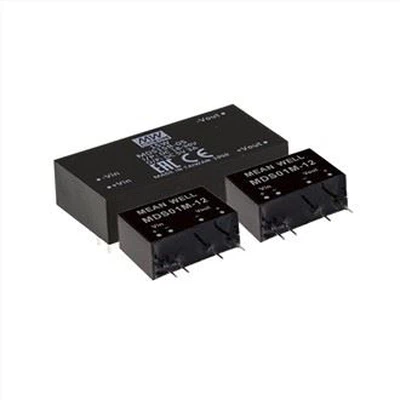
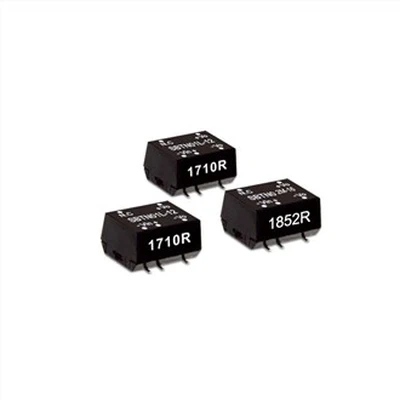
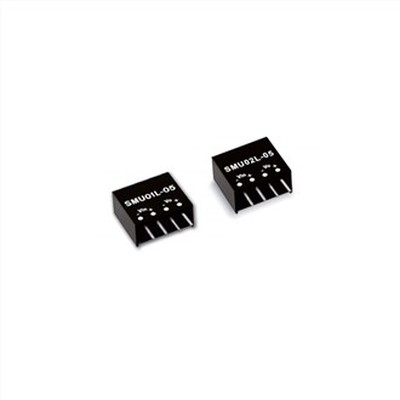
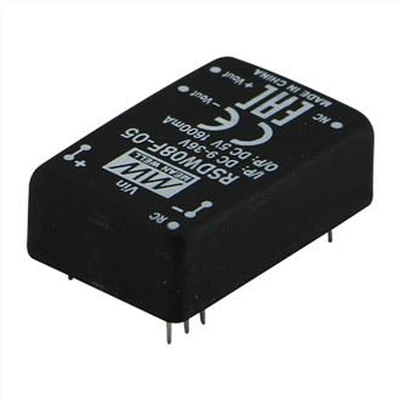
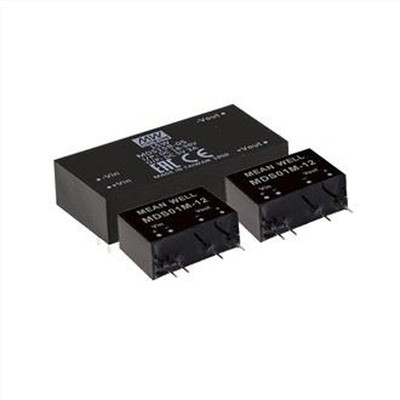
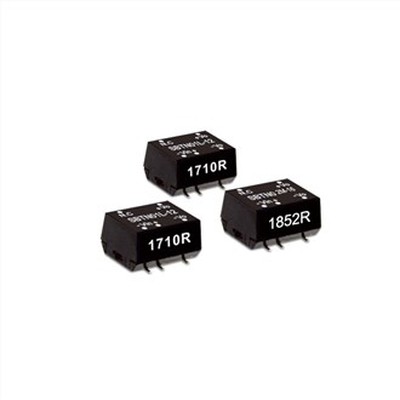
A DC DC converter is an electrical system (device) which converts direct current (DC) sources from one voltage level to another. In other words, a DC DC converter takes as input a DC input voltage and outputs a different DC voltage. The output DC voltage can be higher or lower than the DC input voltage. As the name implies, a DC DC converter only works with direct current (DC) sources and not with alternative current (AC) sources.
Benefits of DC DC Converter
Voltage adaptability
DC DC converters can convert the input voltage from a power source into an output voltage suitable for specific devices. This makes them well-suited for converting electrical energy between devices with different voltage requirements. For example, they can convert the 12V DC power from a car battery into 5V DC power suitable for charging a mobile phone.
Current regulation
DC DC converters can also regulate the output current to meet the charging requirements of devices. This allows them to provide the appropriate charging current for different devices, ensuring charging safety and effectiveness.
Energy conversion efficiency
DC DC converters typically have high energy conversion efficiency. They can convert input electrical energy into output electrical energy with high efficiency, reducing energy waste and loss. This helps improve energy utilization in devices and prolong battery life.
Versatility
DC DC converters can adapt to different input and output voltage requirements, making them versatile in various applications. They can be used for charging devices, electronic equipment, communication devices, automotive electronics, and more.





Why Choose Us
Rich Experience
With more than 10 years of experience in power supply business, and considering that power supply is very important to our equipment,
High-quality products
We founded the "Jiangtek" brand to provide high-quality products at reasonable prices. We hope to be your reliable power supply partner in China.
Excellent Service
We not only get money from you, but also provide top-quality products at reasonable prices and enthusiastic services.
Values
One of our values is "Today's best performance is tomorrow's benchmark".
How Does a DC DC Converter Work?
The basic DC-DC converter will take the current and pass it through a "switching element". This turns the signal into a square wave, which is actually AC. The wave then passes through another filter, which turns it back into a DC signal of the appropriate voltage necessary.
What Are the Common Input Voltage Ranges For DC DC Converters?
The DC-DC converters themselves must operate down to a significantly lower input voltage, to allow for voltage drops within the equipment. Typically the minimum is about -38 V. Most systems include a low input shutdown (LISD) function, to shut down the DC-DC converters if the input voltage falls below the minimum. Assuming the LISD is set to 37±1 V, the minimum voltage at the DC-DC converter is 36 V.
Load variation impacts DC-DC converter performance by influencing its efficiency, output voltage stability, and thermal behavior. As the load increases or decreases, the converter must adjust its operation to maintain a consistent output voltage, which can lead to changes in efficiency and heat generation. Significant load variations can cause output voltage ripple and transient responses, potentially affecting the performance of the connected devices.
Efficiency
One of the most important features to consider is the efficiency of the DC DC converter. Higher efficiency means less power loss, longer battery life, and reduced heat generation. Look for converters with high efficiency ratings, typically above 85%.
Input voltage range
The input voltage range is the range of voltages that the DC/DC converter can accept. It's important to choose a converter that can handle the voltage range of your power source. Some converters have a wide input voltage range, which can be useful in applications where the power source can vary.
Output voltage regulation
Output voltage regulation refers to the ability of the converter to maintain a stable output voltage regardless of changes in input voltage or load current. A stable output voltage is important for powering sensitive electronic circuits and devices.
Size and form factor
The size and form factor of the DC/DC converter can be important in applications where space is at a premium. Some converters are designed to be compact and low profile, while others are larger and more robust.
Noise and EMI
Some DC/DC converters can generate electromagnetic interference (EMI) and noise, which can interfere with the performance of other electronic circuits. Look for converters that generate low levels of noise and EMI, especially in applications where signal integrity is critical.
Power density
Power density refers to the amount of power that can be delivered by the converter in a given volume or area. High power density can be important in applications where space is limited and more power is needed.
Operating temperature range
The operating temperature range is the range of temperatures that the DC/DC converter can operate within. It's important to choose a converter that can operate within the temperature range of your application, especially in harsh environments.
How Do You Test The Performance Of A DC DC Converter?
Efficiency test
Typically, the most important DC test for the DC-DC converter is efficiency. This is especially true for battery-powered devices, because efficiency has a direct impact on the life of a device. The efficiency of the converter is the ratio between the output power and the input power.
Load regulation test
The load regulation test measures the ability of the DC-DC converter to sustain the specified voltage output when the load current (Iload) varies at constant input voltage. To execute this test, after powering up the product, slowly vary the output load between the specified minimum and maximum current values. The measured output voltage changes should be within the range specified in the product’s technical specification. For the test setup, use the same connection employed for the efficiency test.
Line regulation test
The line regulation test represents the ability of the DC-DC converter to sustain the specified output voltage while the input voltage is varied between a specified range of voltages. To carry out this test, set the input power source to a value within the input range of the product and power up the product. While monitoring the product output voltage, slowly vary the input voltage between the specified minimum and maximum values. The measured output voltage changes should be within the range specified in the product’s technical specification.
Ripple test
The DC-DC converter has different internal topologies used at different internal switching frequencies that are reflected in the output ripple frequency. The ripple on the output voltage is measured as rejected input noise on the output voltage using an oscilloscope, with one channel on the input and one channel on the output of the converter.
Types of DC DC Converter

Buck converter (Step-Down Converter)
This steps down the input voltage to a lower output voltage while increasing the output current. It employs a series of switches, an inductor, and a capacitor to regulate the output voltage by adjusting the duty cycle of the switches. Buck converters are commonly used in applications that require a lower voltage level than the input supply, such as battery-powered devices and voltage regulation in computer systems.
Boost converter (Step-Up Converter)
This steps up the input voltage to a higher output voltage while decreasing the output current. It utilizes switches, an inductor, and a capacitor to manage energy transfer, resulting in an increased output voltage. Boost converters are commonly used in applications requiring a higher output voltage than the input supply, such as power LED drivers or voltage boosting for portable devices.
Buck-boost converter
This is a versatile topology that can step up or step down the input voltage, depending on the duty cycle of the switches. This topology combines elements of both buck and boost converters, making it suitable for applications with varying input voltages or when both step-up and step-down conversions are needed. Buck-boost converters are used in applications such as solar power systems and battery-powered devices with fluctuating voltage levels.
Ćuk converter
This is an advanced topology that can provide both step-up and step-down voltage conversion with low input and output current ripple. It utilizes a combination of inductors and capacitors in a unique arrangement, resulting in high efficiency and improved performance compared to other non-isolated converters. Ćuk converters are used in power supply designs that require low output voltage ripple and high efficiency, such as sensitive analog or mixed-signal circuits.
SEPIC converter (Single-Ended Primary-Inductor Converter)
This is a versatile topology that can perform both step-up and step-down voltage conversion. It offers several advantages, including continuous input and output currents and the ability to maintain a stable output voltage even when the input voltage is close to or equal to the output voltage. SEPIC converters are suitable for applications requiring flexible voltage conversion with minimal input or output current disruption, such as automotive power supplies and battery chargers.
Zeta converter
This is a less common topology that provides similar functionality to the SEPIC converter in that it allows for both step-up and step-down voltage conversions. It employs a unique arrangement of inductors, capacitors, and switches, resulting in high efficiency and flexibility. The Zeta converter is used in applications where precise voltage regulation and a wide range of input and output voltages are needed, such as telecom power supplies or battery management systems.
Components of DC DC Converter
Switching element: Typically, a transistor, the Switching Element, is used to switch current flow on and off in the converter circuit.
Inductor: An Inductor is a passive electronic component that stores energy in a magnetic field when electric current flows through it. It is often used in DC/DC converters to store energy for later use.
Capacitor: A Capacitor is a passive electronic component that stores energy in an electric field. In DC/DC converters, capacitors are used to smooth the output voltage and filter out any AC components.
Renewable energy applications
The DC DC converter topologies employed for renewable energy applications need to draw continuous and smooth input current so ripple reduction can be achieved. It should also be able to integrate with different types of power sources. Non-isolated interleaved high voltage gain topologies are typically employed for interfacing renewables and microgrids.
Medical devices
Isolated DC DC converters are crucial in applications where safety is a critical aspect. This is essential for separating the output from dangerous voltages on the input side. However, non-isolated converter topologies can be employed for applications like the power supply of an x-ray system.
Vehicles
In the case of vehicles, the main DC DC converter changes power from the onboard high voltage battery into lower DC voltages used to power lights, wipers, and window controls. This is true for both electric vehicles and hybrid electric vehicles. Isolation is crucial in cases where separation of control systems is essential from high voltage domains. Buck-boost converters are utilized for step-up or step-down, and charge-pump converters are used for voltage inversion.
Smart lighting
Several lighting applications require LED backlight driver solutions that possess high efficiency, direct current control, voltage protection, PWM-based control, and simple design. The DC DC converter topologies that serve as effective drivers include linear regulators, charge pumps, and other conventional switching converters.
Maintenance Tips for DC DC Converter
Check whether the casing of the DC DC converter is deformed or has obvious collision marks, and then check whether there are foreign objects between the cooling fins. If there is foreign matter,it is available by compressed air to blow away, so as not to affect the heat dissipation performance of the DC DC converter.
Check whether the DC DC converter connecting wire harness is firm and free of looseness, damage or cracks. If there is any, it should be replaced or repaired in time to avoid leakage or short circuit.
Check whether the fastening bolts of the DC DC converter are corroded and whether the fastening force is sufficient to avoid loosening of the DC DC converter due to falling off.
Measure whether the output voltage of the DC DC converter is normal, and judge whether it is working normally. The measurement method ensures that the wiring harness of the whole vehicle is connected normally, and the voltage at both ends of the 12V battery is measured before power-on.
Detect the insulation performance of the DC DC converter, and use an insulation resistance meter to detect the insulation resistance value of the high-voltage interface of the DC DC converter.
FAQ
We're professional dc dc converter suppliers in China, specialized in providing high quality products and service. If you're going to wholesale high-grade dc dc converter in stock, welcome to get pricelist and quotation from our factory.
inverter 120 to 12 volt, programmable 3 phase ac power supply, 24 volt cctv power supply